Game assets
When a beautiful prop is not yet a game asset
A convincing object on screen can hide a surprisingly practical question: what, exactly, did the tool give you?
No firsthand experiment reported
Published

A convincing object on screen can hide a surprisingly practical question: what, exactly, did the tool give you?
Worth trying: decide what the object must let the player do before choosing the representation. Let that action determine the test.
What we know / don't: renderer documentation establishes supported loading paths, not the suitability of a specific asset. The lantern scene is a proposed test, not an experiment we have completed.
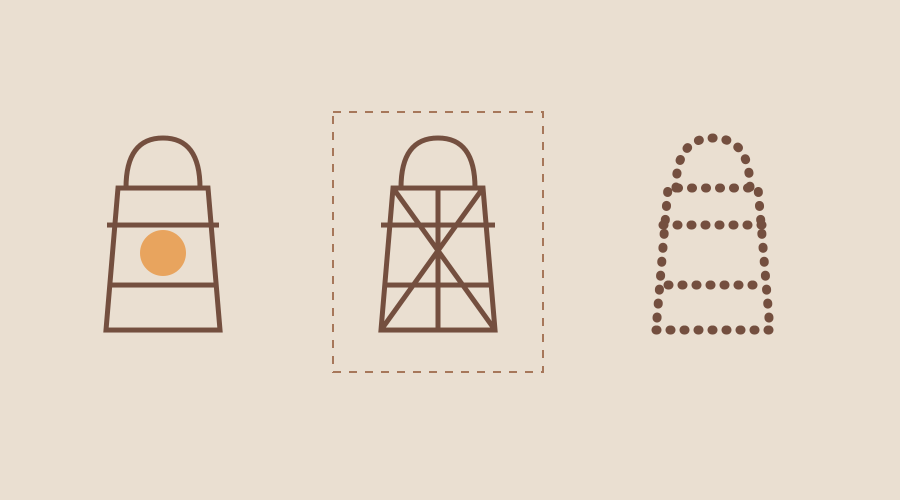
A picture, mesh and splat offer different possibilities.
Read about representations
A mesh, an image and a Gaussian splat can all depict the same lantern. They do not necessarily offer the same editing, lighting, animation or interaction options. The right representation depends on the job. Background atmosphere, an inspectable collectible and a physics object ask for different things.
Loading a splat does not establish gameplay suitability.

Read the renderer documentation and its limits
Even successful loading answers only part of the question. Spark's documentation describes support for several splat formats, including Gaussian PLY, and shows placing a loaded object in a scene. That makes a compatible loader a plausible integration route; it does not establish that any particular generated output will look right, run cheaply or provide collision geometry.
A plain scene exposes interaction and scaling limits.
Read the proposed scene and scaling checks
My preferred first scene is deliberately plain: one prop, one moving camera, one foreground object and a floor. Circle the prop. Let the foreground object pass across it. Inspect the back. Then try the intended interaction with whatever separate collision or selection structure the game actually uses.
A glamorous still can make a defect easy to miss. A simple scene makes the boundaries useful. Perhaps the prop is excellent set dressing but unsuitable for close inspection. Perhaps it works in a short camera shot but needs too much repair for gameplay. Those are valuable results, not reasons to call the entire approach either magic or useless.
The next question is scale. One object fitting the budget does not tell you what twenty will cost. Measure the intended scene, compare it with the current approach and count the time spent importing, repairing and checking—not just the time spent generating.