Animation
The most useful first test may already be in the repository
AnyMove documents a supplied-data fit that stops at motion JSON. Separate that setup check from reader quality, new video generation, export and gameplay validation.
Updated
Includes one bounded supplied-example CPU fit
Published
Yes: AnyMove documents a small fitting exercise using detections already included with its dragon example. It avoids generating another video. That is a useful first boundary when investigating the pipeline, but it is not an end-to-end animation test. The original note was based on research; a later, limited fit is described below.
November 1 update: We ran one CPU fit using the supplied dragon detections: 124 frames at 24 fps, with 42 bones and 50 keypoints. Installed dependency versions differed from those specified by the project. Independent numerical and reprojection checks support this one case; they do not establish visual motion quality, transfer to an owned rig, or a game-ready GLB. Export and game import remain separate tests.
The project README describes CPU fitting without Blender or extra example downloads. That concerns this step after setup, not a dependency-free checkout. The full workflow separately documents Python 3.11, CUDA/GPU and Blender 5.x requirements, and a fal key for new clips. Those requirements should not all be attributed to the small fit.
What we know / don't: originally researched November 1, 2026 at commit 7a82a0a8fadffddd5c24fabf0697d9b6c814ce6e. The later supplied-example CPU fit is described above. The visual criteria remain proposals. No new-video generation, animation export or game import was performed.
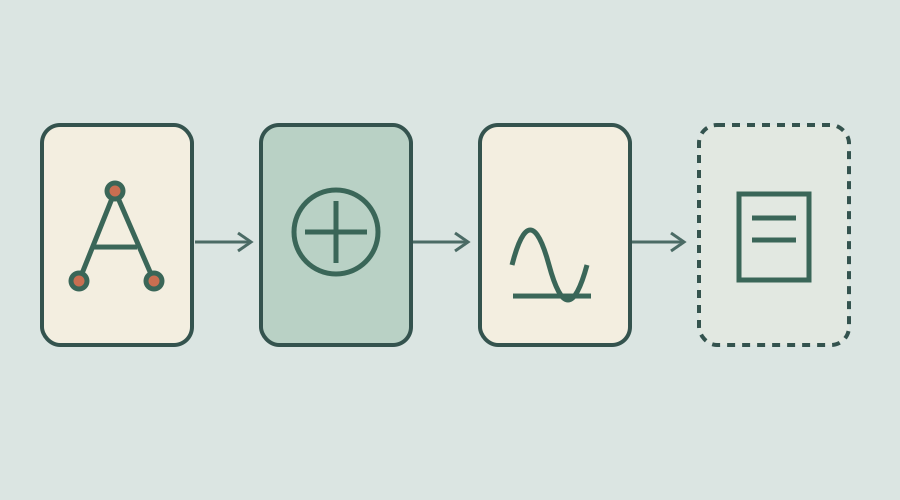
The supplied fit starts with detections and a rig.
Read the inputs and setup limits
What goes into the small fit
The documented input pair is examples/dragon_roar/det.npz and assets/dragon/rigged/rig_info.json. The first contains previously obtained observations; the second describes the rig. The command sets MOCAP_CREATURE to assets/dragon, invokes the mocap.solve module and writes runs/dragon/clips/roar/motion.json. Follow the linked README for its shell-specific setup and command rather than treating these filenames as a Windows installation guide.
The pinned dependency file lists torch 2.11.0 and numpy 2.4.6 among the full project's dependencies. We have not established a minimal supported CPU environment. Do not remove packages and call that an officially supported setup. Read current platform and package instructions before a separately authorized attempt.
A motion record answers a narrow setup question.
Read what a successful fit would show
What finishing would tell you
At most, success would show that this checkout and environment can fit this supplied input and produce its motion record. The solver source writes motion JSON and reports fit diagnostics. It does not itself write a GLB.
Our proposed attempt record is small: save the commit and environment, exact input paths and hashes, command, exit status, output hash and diagnostic log. Check whether the output parses and contains motion data before describing the attempt as completed. Keep a failed run and its error; a missing input or incompatible package is a setup finding, not evidence that the creature method fails.
A low diagnostic error still needs interpretation. Agreement between two observations is not independent evidence that motion matches a real creature. In a future visual inspection, watch a planted foot, a turn and a return to idle rather than relying on a single number.
Export and game import are separate tests.
Read about the separate export and game tests
What remains a separate test
The supplied detections do not test a reader on your creature or establish newly generated video quality. They bypass those earlier uncertainties. A useful next question is whether the stages work with the creature and motion your game needs, rather than whether the bundled roar can be repeated.
Turning the result into an inspectable animation is another boundary. Keep export and game import as separate attempts. For that later review, inspect scale, orientation, contact, loops and transitions in the target scene, then make one correction and record its cost. A file loading successfully cannot settle those editorial acceptance criteria.
Keep setup, cost and rights in the decision.
Read the decision, costs and rights
Decide whether to continue
For a developer investigating setup, the bundled fit is a sensible small first attempt. For someone who needs a walk cycle ready for a game, it is preliminary evidence. If the fit succeeds, choose the next unresolved stage; if it fails, resolve that failure before adding a new mesh, reader and clip.
There is no new-video generation fee in a route that never asks a service to generate a clip. That does not make compute, setup or staff time free. We have not obtained a current service quote, and one run cannot establish a general speed, so this note gives no price or speed promise.
The repository's code license does not settle every model, example asset or hosted service permission. Its README distinguishes project licensing from external terms; review exact materials before production use. No creator media is reproduced here.